





Quality in every detail: Marco Hering on timeless marketing at Lunor
Marco Hering has been Head of Marketing at Lunor for 11 years. In this interview, he talks about what it really means to market a brand built on quality, why demographics alone don't explain buyer behaviour, and how the Limbic Type framework is changing the way Lunor thinks about its audience.
 Written by

Embrosa
There's something quietly radical about a company that keeps a frame in its collection for 25 years.
In an industry where new collections, seasonal colours and trend cycles are the norm, Lunor, the independent eyewear brand from Germany's Black Forest, has built its identity around the opposite principle. Evolution, not revolution. Repairability over replacement. Understatement as a marketing message.
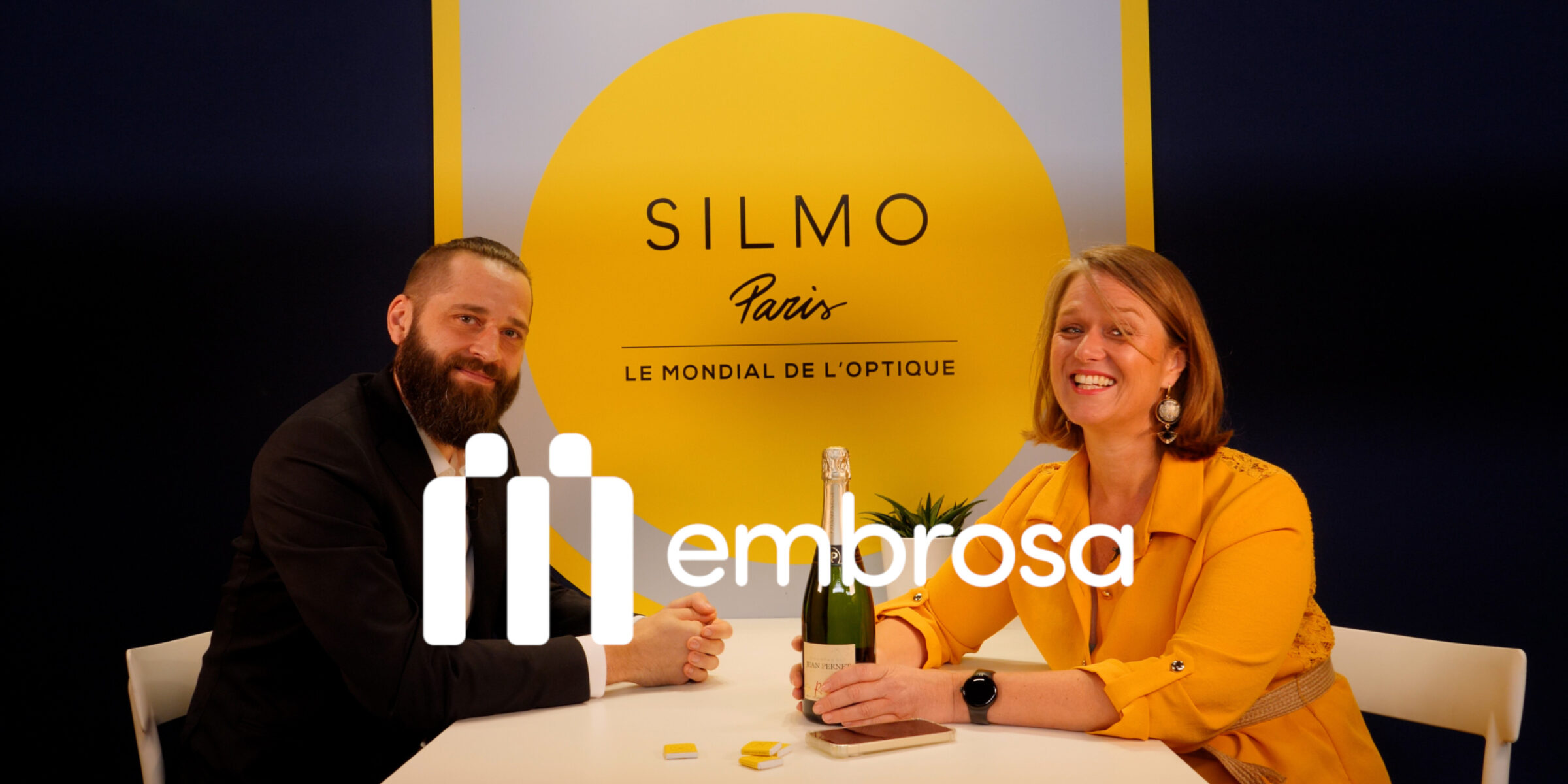
Marco Hering has been Head of Marketing at Lunor since 2014, joining the company almost literally on his first day at Silmo in Paris. Over 11 years, he's turned quality into more than a product promise, it's become the operating system for everything Lunor creates, from the paper weight of a printed catalogue to the champagne glass at a trade show booth.
We sat down with Marco at Silmo to talk craft, consumer psychology, and what it actually takes to market a brand that refuses to shout.
Quality is a detail, not a slogan
When Marco talks about quality at Lunor, he doesn't start with the frames. He starts with the coffee.
"If you come to our booth at a trade show, you won't get coffee in a paper cup. You'll get it in a proper cup. And if we offer you champagne, it won't be the cheap one, and it won't come in a plastic glass."Marco Hering
Head of Marketing at Lunor
It sounds like a small thing. But that's exactly the point. Lunor's marketing philosophy is built on the idea that quality has to be present in every touchpoint, not announced, but felt.
The same thinking applies to print. Marco describes lengthy internal discussions about paper selection, weight, texture, finish, for materials that most people will never consciously notice.
"The majority of people won't really register it. But some will pick it up and think, this feels nice. And that's enough. The message of quality gets through."
This obsessive attention to detail isn't just aesthetic. For a brand that markets through opticians and distributors rather than directly to end consumers, the experience at every touchpoint, booth, catalogue, in-store material, is doing the heavy lifting.
A brand built for the long run
Lunor's approach to its product collection is equally unusual. While most eyewear brands refresh their collections each season, some Lunor models have been in the range for over 25 years.
"We try to refrain from jumping on every trend," Marco explains. "Our core idea is more evolution instead of revolution. Sometimes it's sufficient to take a successful model, add a new colour or adjust the size slightly, and it's modernised, but still recognisably Lunor."
This long-term thinking has practical sustainability implications too. Because frames stay in the collection, Lunor maintains a large spare parts inventory. Customers who've worn a Lunor frame for years can bring it back to their optician for new lenses or repaired hinges, extending the life of the product by years.
It's a model that rewards loyalty and builds genuine relationships, between brand and optician, and between optician and customer. Marco is clear that being a reliable partner to the optical trade is one of Lunor's core commitments.
The Covid campaign that worked
During the pandemic in 2020, Lunor turned a moment of crisis into a compelling brand story. While competitors who relied on Asian supply chains struggled with delivery disruptions, Lunor's German manufacturing gave them a genuine advantage, and a genuine message.
"We created a small campaign around hey, there's a brand from Germany. It's sustainable, it's regional, and it's good for you." The centrepiece was a display for opticians' shop windows: a visual with a beehive and a forest, leaning into Lunor's Black Forest roots. Marco admits it might have looked a little corny. "But it worked so well." They'd planned to distribute 20 or 30 units. Within a few weeks, they'd shipped more than 500.
It's a good example of what effective trade marketing can look like: a message that was true, timely, and immediately useful for the optician trying to explain to their customers why Lunor was still available when other brands weren't.
Why demographics don't tell the whole story
The most unexpected part of our conversation with Marco was about a framework called the Limbic Type model, a neuropsychological approach to understanding buyer behaviour that Lunor has recently started implementing.
Marco introduced it with a question: imagine two people, both male, both around 70, both British, both living in a castle. Same demographics entirely. One is King Charles. The other is Ozzy Osbourne.
The point is that demographic segmentation, age, gender, income, geography, tells you very little about what actually motivates someone to make a decision. The Limbic model attempts to explain the subconscious filters that shape how people process information and why they choose what they choose.
"Their demographics are identical. But their way of thinking, buying, living, completely different."
At its core, the model identifies three motivational dimensions: balance (safety, caution, future-orientation), dominance (status, assertiveness, achievement), and stimulation (experience, novelty, enjoyment). From these, seven distinct psychological types can be identified, ranging from the "adventurer" who craves excitement and newness, to the "traditional" type who values stability and familiarity.
Marco started working with the model in December 2024, engaging directly with the consultancy founded by the framework's original developer. They've since run workshops, created persona models for Lunor's target audiences, and done focus groups with opticians to validate their assumptions.
"We had a lot of gut feeling about our customers," he says. "The Limbic work was partly validation — and partly about finding the nuances."
The challenge of B2B2C marketing
One of the most honest moments in our conversation came when Marco described a structural challenge that anyone working in trade marketing will recognise immediately.
"We sell to opticians. Or we sell through distributors who sell to opticians. We actually don't know a lot about our end consumers, the people who walk into the store and buy the frame."
It's a fundamental tension in B2B2C marketing. The brand creates the product and the marketing materials. The reseller activates them locally. But the final customer relationship is one step removed.
For Lunor, implementing the Limbic Type framework is partly a way to close that gap: to better understand the end consumer they rarely meet directly, and to give their optician partners smarter tools for selling.
The language problem
Applying a psychological framework across multiple languages and markets turns out to be harder than it sounds.
Marco gives a vivid example: the word "understatement" is central to Lunor's brand voice. It resonates with a specific Limbic type, people who value quiet refinement over loud status signalling. The word works well in English. In German, though, the closest translation carries different connotations and ends up attracting an entirely different personality type. The wrong one.
"The wording is something where you can make a lot of mistakes," Marco says. Getting the right nuance in French, Dutch or Spanish requires more than translation, it requires understanding how the psychological register of a word shifts between cultures.
When asked whether AI tools like ChatGPT can help with this, Marco is honest: "It provides you with text that sounds really nice. But if you go into the detail, the refinement, I don't think it's at a point where it can help you a lot with these things. You still need the human in the loop."
Building a marketing team as an in-house agency
With a team of six, two graphic designers, a content creator, a media design student, a PR person and himself, Marco runs what he describes as "a little agency within the company." They handle social media, photography (in their own studio), video production and PR in-house.
Over the past 12 months, video has been a growing focus. Marco has been personally involved in learning the craft: lighting, editing, the details that make the difference between a good video and a great one.
"Video is so important in marketing. Pictures are nice and you need them, but video does something pictures can't. The combination is the key."
Advice for junior Marco
We ended the conversation with a question Marco clearly enjoyed: what would he tell himself on his first day at Lunor, 11 years ago?
Two things.
First: watch, watch and learn. "For the first time, don't start to change everything, adjust everything. Just sit there, understand, and then gradually start to readjust. If you turn too many screws at once, it will be chaos and you won't see the pattern."
Second: keep educating yourself. "If you stop learning, it's really hard to go back. Keep the habit going."
————
Marco Hering is Head of Marketing at Lunor. This interview was recorded at Silmo Paris 2025 as part of our Embrosa Talks interview series: conversations with brand managers and trade marketers in the optical industry and beyond.
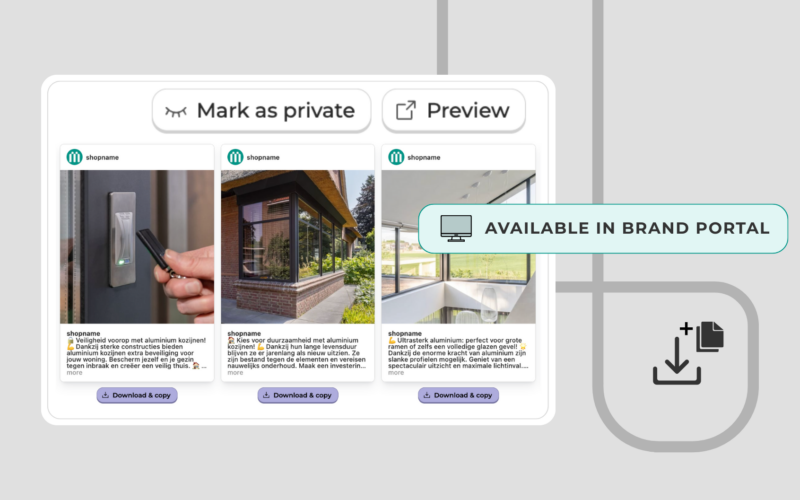
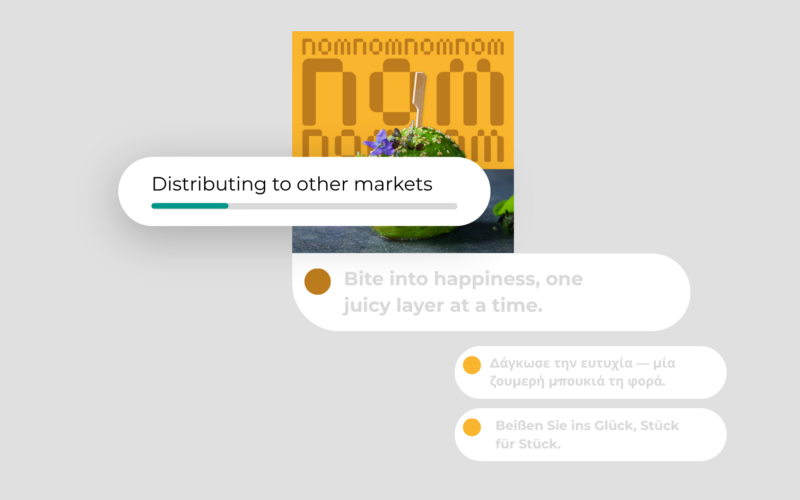
At Embrosa, we build marketing infrastructure for B2B2C networks, helping brands activate their resellers locally with the right content, at the right time.
Subscribe to our Linkedin newsletter
by the Friendly Trade Marketer
The easiest way to share social media posts with your network. Create one simple Social Media Hub to share with your network.
Watch the full interview
Lunor shows that great branding isn’t about doing more: it’s about doing the right things, with care.

